START HERE
What kind of freedom are you building?
There is no single right path. Pick the direction that fits your life today.
Plan your income, manage debt, invest with purpose, and share clear family responsibilities.
 YOUR ROADMAP
24
months · adjustable anytime
YOUR ROADMAP
24
months · adjustable anytime
There is no single right path. Pick the direction that fits your life today.
Start with the risks that could erase your progress: health, auto, housing, disability, and term life when someone depends on your income.
Short lessons and knowledge checks save your completed subjects on this device.
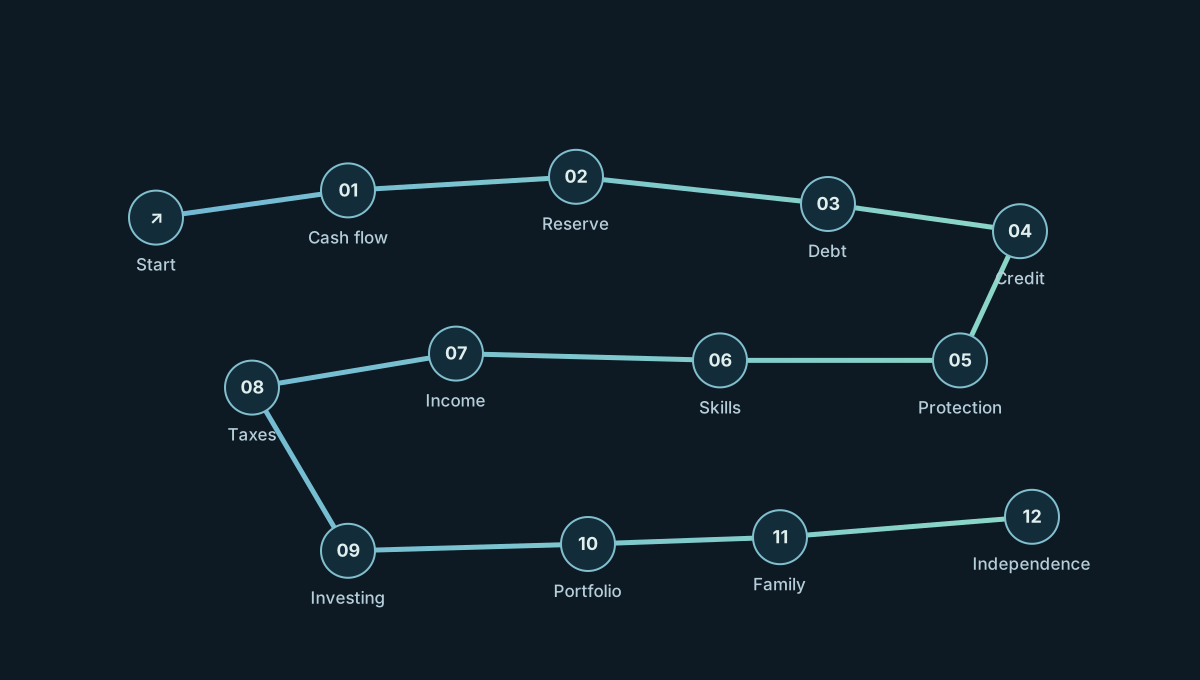
Start your first lesson to move to checkpoint one.
Each completed roadmap lesson advances you by two checkpoints. If you miss a question, review the explanation and try again. Complete all six roadmap lessons to build your financial foundation.
$300,000 is the first major capital benchmark. If it stays invested, a cautious 4% example equals about $12,000 a year, or $1,000 a month, before taxes. That can create options and reduce dependence on earned income, but it is not guaranteed financial independence.
Protect your progress: diversify, control fees, account for taxes and inflation, limit withdrawals, and review the allocation every year. Investment values can fall.
Pick what would improve your life most. Locked choices open as you pass lessons.
Pass a lesson to open your first quality-of-life choices.
Change the numbers to build an example path. Investment returns are estimates, not promises.
Invest for a child’s future or build capital that helps the family move when an opportunity appears. Shorter timelines usually require larger monthly commitments.
Set your goal to see the path.
A tax-advantaged education option. Rules, eligible expenses, fees, and state benefits differ.
Read IRS 529 basics ↗An adult manages assets for a child until the transfer age under state law. Ownership, taxes, and financial-aid effects matter.
Review investing basics ↗A child generally needs real taxable compensation. Contribution limits and documentation rules still apply.
Check current IRS rules ↗Keep accessible savings for education tools, transportation, childcare, health needs, or a safe opportunity.
Assign the family team ↓Educational examples only. Investment returns are not guaranteed. Consider taxes, account ownership, aid eligibility, fees, access rules, and your own emergency needs before choosing an account.
Pick a path and enter what is realistic. The roadmap changes with you.
These tools can help regular families too, but only when the basics, rules, costs, and risks are understood.
Separate bills, emergencies, and longer-term goals. Compare current rates, fees, access, and deposit protection instead of chasing a headline yield.
Cover losses that could reset the family. Life insurance protects dependents; it is not a universal investment or automatic wealth strategy.
Long-term investing, retirement accounts, and carefully tested businesses can create ownership. Returns are uncertain; fees and concentration matter.
Use eligible accounts and legitimate deductions. An LLC does not make personal expenses deductible, and a tax benefit never makes a bad purchase good.
Automatic saving, on-time bills, debt payments, recordkeeping, and scheduled family reviews beat depending on motivation.
Families and qualified professionals can divide work and catch mistakes. Keep written agreements, independent access to records, and clear ownership.
The bottom line: financially successful people often combine higher income, controlled spending, patient ownership, tax planning, protection, and teams. None of those removes risk or guarantees wealth.
One person does not have to carry the whole plan. Share effort while keeping expectations and money clear.
Examples: a six-month emergency reserve, reliable transportation, training costs, a family business pilot, or a down-payment fund.
One person may sell, another may handle scheduling, bookkeeping, childcare, transportation, repairs, or research.
Record contributions, ownership, pay, decision rights, exit terms, and what happens if someone cannot continue.
A shared goal should not require anyone to surrender all personal savings, credit access, or financial independence.
Name the goal, the amount, the deadline, each person’s contribution, and the next weekly action. Review progress without blame.
Choose the area that needs attention now. Shared-money decisions still require agreement from the adults involved.
Select the area that best supports your family’s current goal.
Match responsibilities to each person’s strengths. One person can hold two roles in a small family, and roles can rotate every 30–90 days.
Every path shows the first move, the cost/risk, and what to verify.
A loan is a tool with a cost. It can help only when the payment, risk, and backup plan all make sense.
Compare the full cost of the loan—including interest, fees, insurance, taxes, repairs, and slower months—not just the advertised payment.
Safer next step: pause, compare offers, build cash flow, and consider a nonprofit credit counselor or qualified professional for your situation.
Education only. This is not lending, tax, legal, or individualized financial advice. Rates, terms, and eligibility vary.
Seven beginner subjects, plain-language lessons, and a short test for each.